 My Account
 Cart
Cart

 Helpline:
  Recite
Guidance for journalists published
New guidance for journalists responds to study which found that 71% of adults with dyslexia in Scotland feel the media misrepresents them.
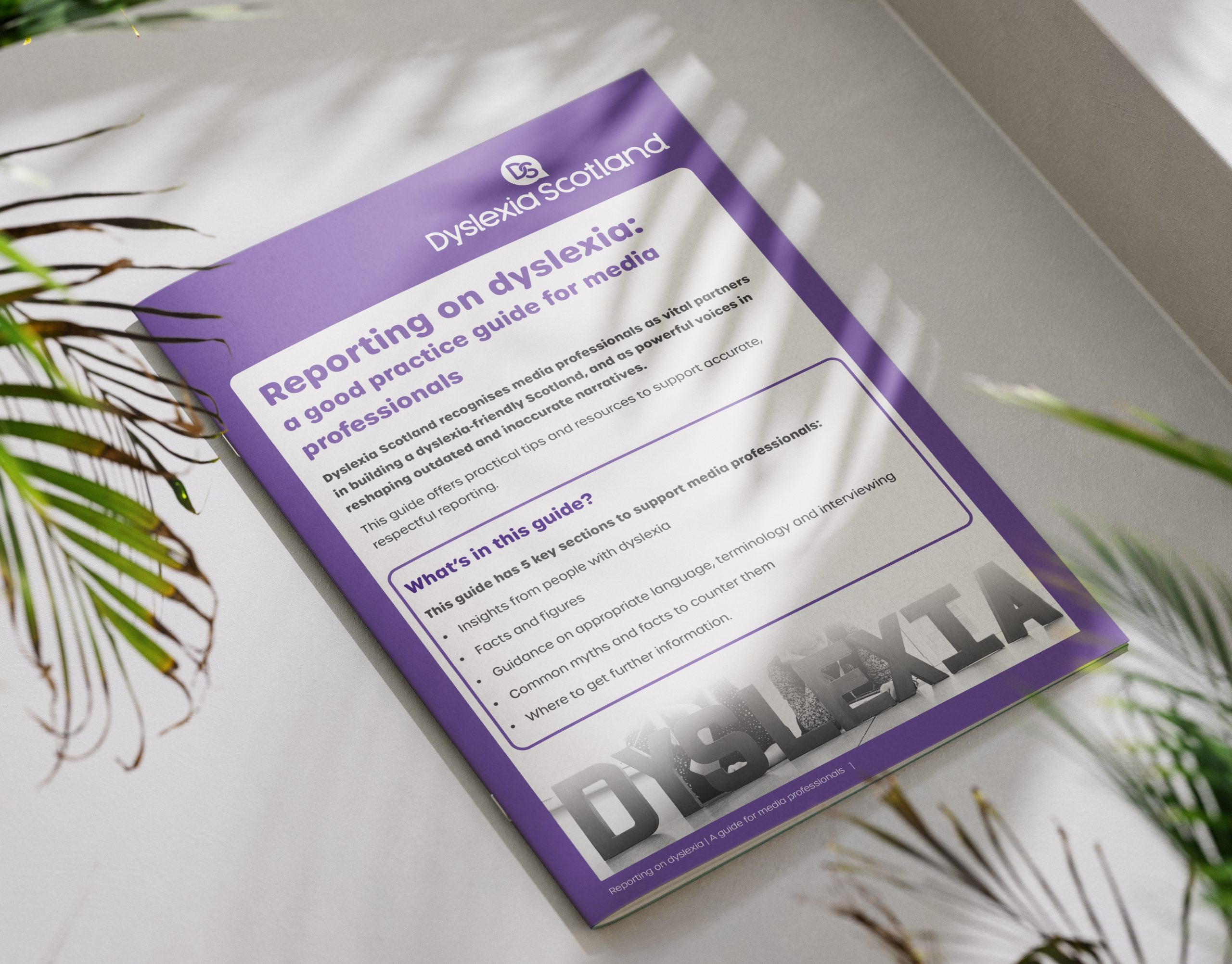
Dyslexia Scotland has published a new good practice guide designed to help journalists and other media professionals report on dyslexia accurately and respectfully.
The resource, ‘Reporting on dyslexia: a good practice guide for media professionals’, highlights the important role of the media in reshaping outdated narratives to help create a more dyslexia-friendly Scotland.
The guide has been released in time to support media coverage of Dyslexia Awareness Week Scotland 2025.
The guide offers:
- insights from people with dyslexia about how media portrayals affect them
- facts and figures to provide context
- guidance on appropriate language and interviewing
- common myths and the facts to counter them
- links to further information and resources.
The need for the guide emerged from a 2024 study by Dyslexia Scotland and the University of Glasgow which found that 71% of adults with dyslexia in Scotland feel the media misrepresents them, often relying on stereotypes or extreme examples.
Research participant Nick said: “People just don’t understand. Dyslexia has always been the target of cheap jokes and base stereotypes. The problem is the system. Because of time constraints, the media relies on these stereotypes, feeding them back into society so that the same jokes and stereotypes are repeated.”
Dyslexia Scotland member Blanche said: “Overall, I think things are moving in the right direction; it’s recognised that there are strengths to being neurodivergent now, not just hindrances. People do also seem to be more accepting when they find out you’re dyslexic, so I believe the general messaging surrounding dyslexia must be improving. I’d personally like to see other traits of dyslexia shared more widely to the public. I think the focus still seems heavily on reading and spelling issues but as any dyslexic person will tell you, there are many more aspects of your life that are affected, like short-term memory, word retrieval and computing certain information.”
Dyslexia Scotland Lead for Creative and Digital Katie Carmichael said: “Media professionals are powerful partners in shaping how the public understands dyslexia. By using this guide, journalists can help to challenge stigma, avoid stereotypes and share accurate stories that reflect both the strengths and the challenges of people with dyslexia.
“The guide also includes practical tips for interviewing people with dyslexia, encouraging media professionals to reflect authentic voices and to avoid reinforcing harmful myths such as ‘people grow out of dyslexia’ or that ‘coloured overlays will fix dyslexia’.”
The guide has been issued to members of the Press and is available to download from in time for Dyslexia Awareness Week Scotland 2025 which runs from 29 September to 5 October.