 My Account
 Cart
Cart

 Helpline:
  Recite
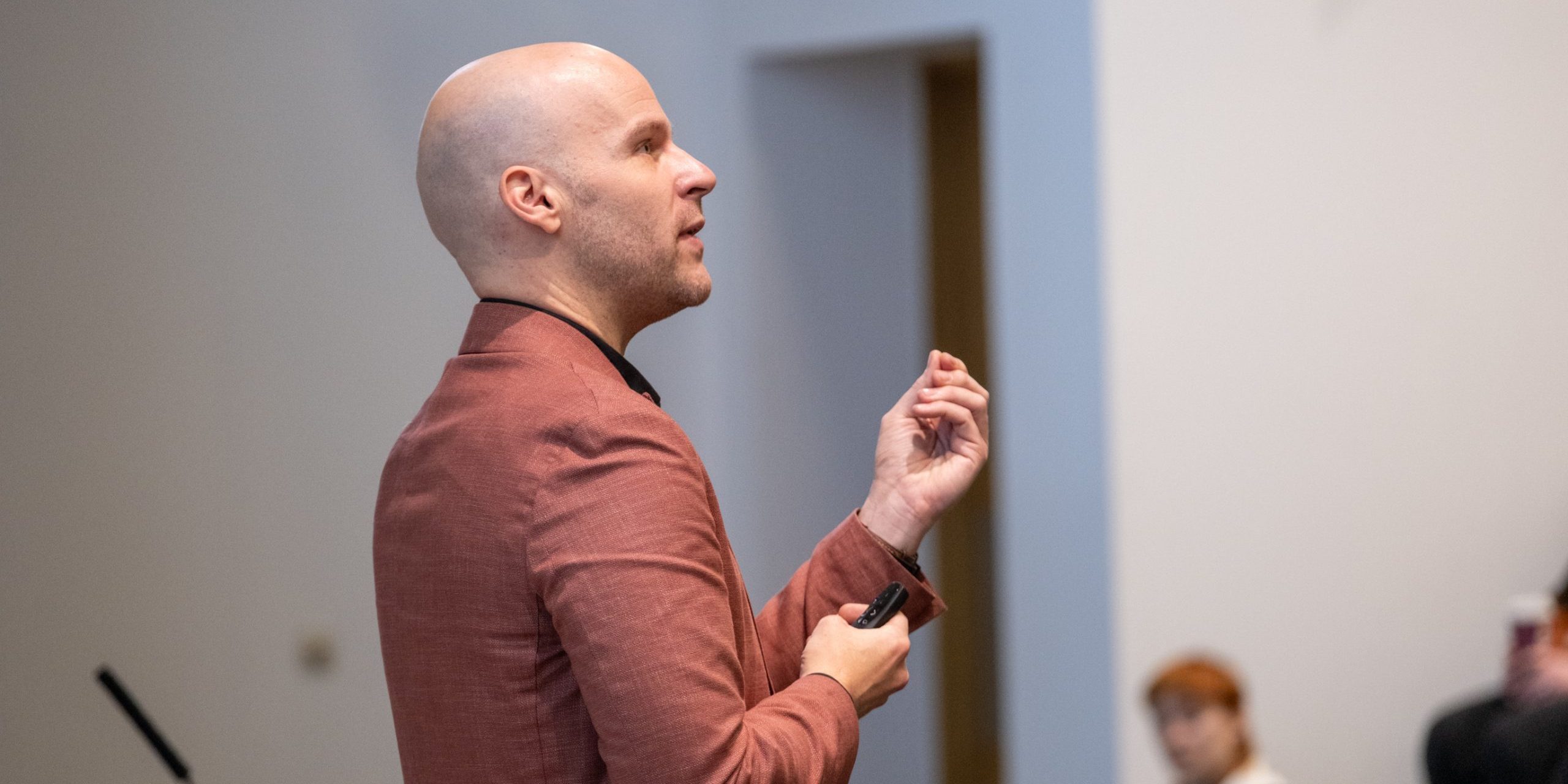
"Moving and motivating": education conference lights a spark
252 educators attended Dyslexia Scotland’s national Education Conference in November
The annual event, which has been running since the 1990s, brings teachers and support for learning staff together for an inspiring professional development opportunity that activates them as inclusive educators.
The sector-leading conference held at the Technology and Innovation Centre in Glasgow included inputs from leading experts on reading and neurodivergence.
Dr Jeremy Law, Senior Lecturer at the University of Glasgow, delivered a powerful keynote speech on the Science of Reading, a body of research on how humans learn the skills. Dr Law said: “A fundamental insight from this research is that reading is not a natural process; unlike spoken language, there is no single area in the brain dedicated solely to reading. Instead, multiple brain regions involved in other tasks must form new connections in a specific way for reading to occur. Simply put… we are not born to read. So, how do children learn to read, and why do some struggle? This conference is delivering at the intersection of academic research and teaching practice. The academic evidence informs practice; teachers make it art.”
Workshops offered ready-to-implement educational techniques to help teachers enhance the learning outcomes of children and young people with dyslexia, ADHD and other neurodivergences in Scottish classrooms.
A marketplace of leading dyslexia-related organsiations were on hand to speak with delgates, with representatives from Barrington Stoke publishers, Reading Wise, Ayoa and more.
Closing the event with an inspirational talk, Dyslexia Scotland Ambassador and wildlife cameraman Hamza Yassin urged the teacher audience to believe in the potential of their learners and encourage young people with dyslexia to follow their strengths and interests.
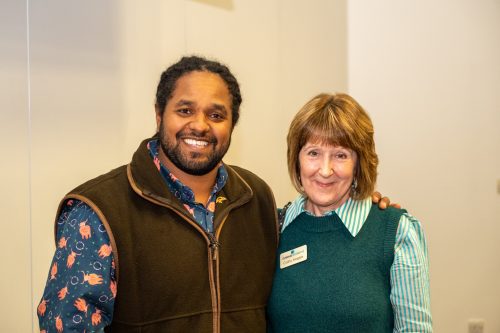
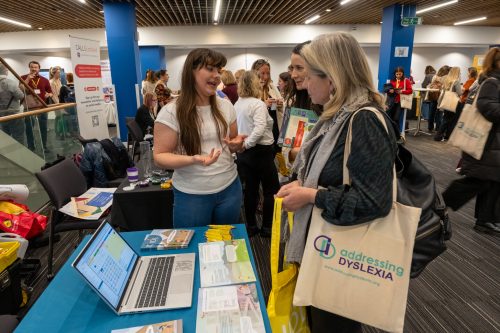
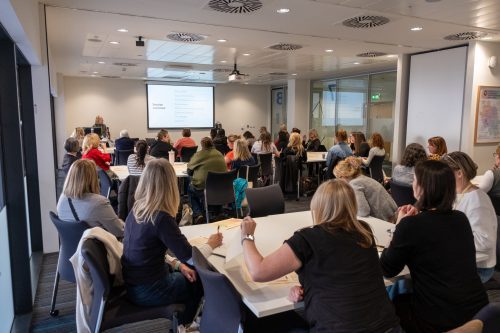
Photo credit: Dave Ferguson
The annual event addresses a clear disadvantage to dyslexic pupils in Scotland’s education system. According to the 2024 pupil census, 35,245 pupils in Scottish schools have been identified as dyslexic, representing around 12% of all pupils with additional support needs. A 2023 report by the Equality and Human Rights Monitor, Is Scotland Fairer?, found that pupils with dyslexia have lower attainment than those without additional support needs, highlighting the urgent need for improved dyslexia support in schools.
Dyslexia Scotland National Development Officer Lena Gillies said: “This year’s conference had our largest crowd yet and sold out quicker than ever before. There is a huge appetite among Scotland’s teachers to learn about dyslexia, how it impacts children and young people’s educational experience and ways to help them achieve their potential. We must do more as a nation to equip teachers with the skills and knowledge to help all learners thrive and call on the Scottish Government and partners to help us meet this growing demand.”
Attendees spoke about the impact the event had on them.
One delegate said: “Honestly one of the best CPDs I have attended. Vital, I think, for all teachers to experience and embed and develop into and throughout their practice. The fundamentals of the constructs of the English language were so ably described and there were amazing lesson ideas that absolutely remove barriers for learners by equipping them with strategies to apply across the curriculum.”
Another said: “The conference was an incredibly uplifting and informative experience that deepened my understanding of dyslexia and inclusive practice. Each workshop provided practical strategies I can bring into my classroom and the keynote speakers were both moving and motivating. Overall, it was a truly inspiring day that reinforced my commitment to supporting every learner’s potential.”
Dyslexia Scotland works in partnership with Education Scotland to provide dyslexia training for Scotland’s education workforce, offering a national Addressing Dyslexia Toolkit, free online modules and a GTCS-accredited Professional Recognition Award in Dyslexia and Inclusive Practice.
This year’s conference was sponsored by The Blair Drummond Smiddy Farm Shop and Cormack Consultancy Group.