My Account
 Cart
Cart

 Helpline:
  Recite
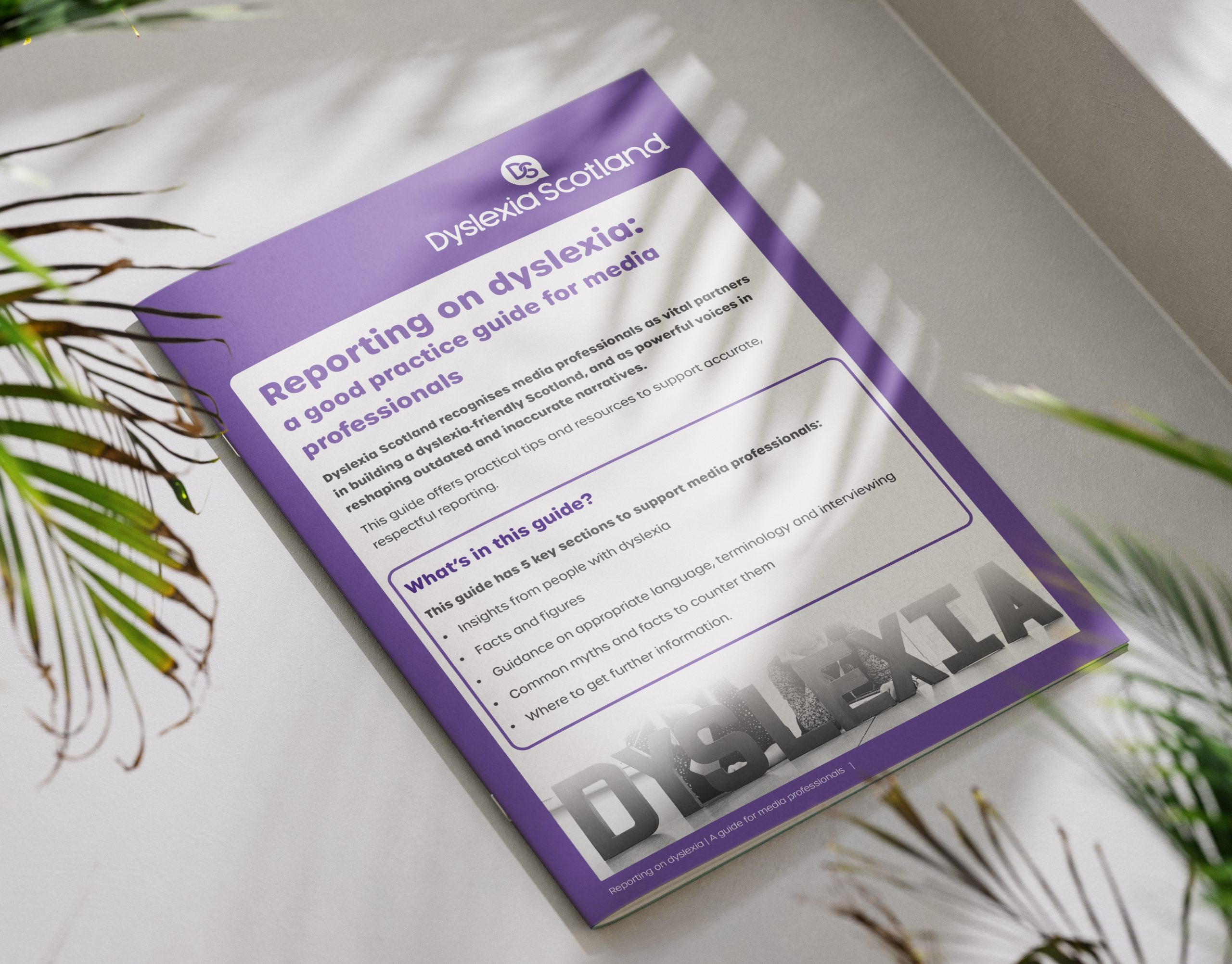
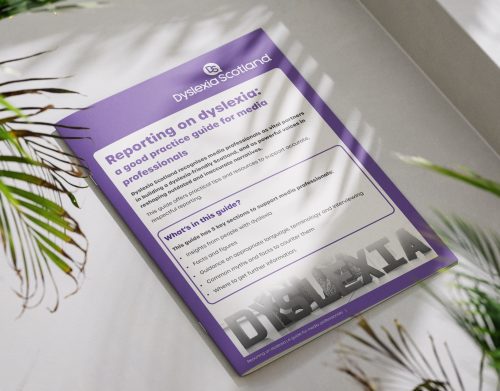
Reporting on dyslexia
Dyslexia Scotland recognises media professionals as vital partners in building a dyslexia-friendly Scotland, and as powerful voices in reshaping outdated and inaccurate narratives. This guide offers practical tips and resources to support accurate, respectful reporting and representation.
We ask media professionals to use this guide when reporting on dyslexia in the Scottish context to:
- present a balanced, respectful view that recognises both the strengths and challenges of people with dyslexia
- report on facts of dyslexia; not perpetuate myths or stereotypes.
Dyslexia Scotland’s vision is for a dyslexia-friendly Scotland where all people with dyslexia have their rights met and are able to reach their full potential. One of the keys steps towards this outcome is for everyone in Scotland to understand what dyslexia is – and what it isn’t. Appropriate representation in the media is a vital part of achieving this.
Who is this guide for?
This guide is for reporters, journalists and other media professionals who want clear, accessible advice on covering dyslexia in Scotland responsibly. Dyslexia is often misunderstood, so this resource is designed to be simple and practical, helping you produce informed and respectful media content.
Insights from people with dyslexia
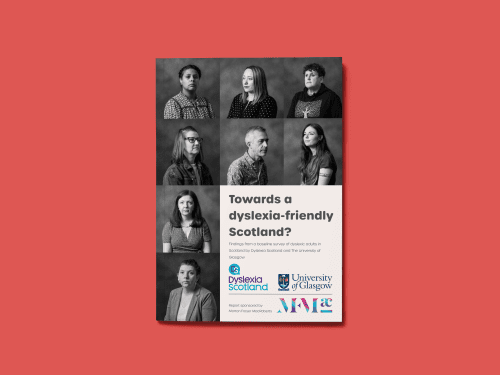
The majority of adults with dyslexia in Scotland feel that the media often fails to accurately portray the diverse experiences of people with dyslexia, focusing instead on stereotypes or extreme cases. A 2024 study by Dyslexia Scotland and the University of Glasgow found that 71% of adults with dyslexia in Scotland feel the media misrepresents them.
While some portrayals are positive, they often focus on high-achieving individuals, which can set unrealistic expectations, overlooking the daily struggles of many people with dyslexia.
Nick’s story
“People just don’t understand. Dyslexia has always been the target of cheap jokes and base stereotypes. The problem is the system. Because of time constraints, the media relies on these stereotypes, feeding them back into society so that the same jokes and stereotypes are repeated.”
Blanche’s story
“Overall, I think things are moving in the right direction; it’s recognised that there are strengths to being neurodivergent now, not just hindrances. People do also seem to be more accepting when they find out you’re dyslexic, so I believe the general messaging surrounding dyslexia must be improving. I’d personally like to see other traits of dyslexia shared more widely to the public. I think the focus still seems heavily on reading and spelling issues but as any dyslexic person will tell you, there are many more aspects of your life that are affected, like short-term memory, word retrieval and computing certain information.”
About dyslexia
There is a Scottish Working definition of Dyslexia.
Contextual data on dyslexia in Scotland
In 2024, Dyslexia Scotland and the University of Glasgow undertook Scotland’s largest-ever survey of adults with dyslexia. The report provides useful statistics and contextual information about the systemic barriers to individuals with dyslexia in Scotland.
The Pupil Census is a useful source of data on dyslexia in Scottish schools.
Languge guide: how to talk about dyslexia
Use person-centred, respectful language. Avoid glamourising or pitying dyslexia. Here’s a quick guide:
| Use these | Don’t use these |
| Identification, assessment of dyslexia, indicators of dyslexia | Diagnosis, diagnostic assessment, symptoms, treatment, cure or any other medical terminology |
| Learning difference/Specific learning difference | Disorder, learning disability, gift, superpower |
| People with dyslexia, dyslexic people, dyslexic community | People who have dyslexia, sufferers of dyslexia, dyslexics |
Why?
- “Sufferers” implies pain and helplessness. Consider the social model of disability when reporting dyslexia – the problems are not within the person, they are in the person’s environment.
- Diagnosis and “having dyslexia” implies a medical condition. Dyslexia is identified by qualified assessors, not doctors.
- Positive stereotypes can overshadow the real need for support and adjustments.
Representative imagery
Avoid images that perpetuate myths and stereotypes. For example, don’t use images of letters jumping about.
Tips for interviewing people with dyslexia
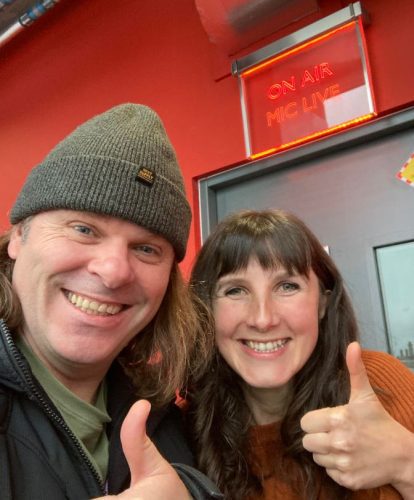
Dyslexia Scotland welcomes opportunities for people with dyslexia to tell their story. These tips will help you and the interviewee to get the best out of the interview.
- Give your interviewee the bigger picture of the report or topic and explain how their interview fits into the context.
- Ask questions one at a time (multi-part questions create cognitive load; they are difficult to process).
- If possible, give questions in advance to help the interviewee prepare answers.
- Allow the interviewee time to process your question before speaking again – count to 5 in your mind.
- Be sensitive. Children, young people and adults with dyslexia often face higher rates of mental health issues, such as anxiety and depression, due to various challenges. Academic struggles, social stigma, bullying and the continuous effort to manage their dyslexia in daily life contribute significantly to their emotional distress. The constant effort required to cope with dyslexia can lead to cognitive overload and mental fatigue, exacerbating these issues. Talking about negative experiences related to dyslexia can be emotional.
Myths versus truths
In 2025 Dyslexia Scotland undertook a survey of the general population of Scotland. This revealed that there are several outdated myths and stereotypes still prevalent in Scotland.
There are some common myths and the facts to counter them in this Myth Buster article.
Where to go for information on dyslexia in Scotland
Dyslexia Scotland: Dyslexia Scotland works to create a dyslexia-friendly Scotland where everyone with dyslexia has their rights met and can reach their full potential.
We do this by empowering individuals through increased awareness, earlier identification and better conditions in education, work and life.
We influence systems and attitudes by working with schools, employers, policymakers and communities to reduce stigma, build confidence, and create opportunites for people with dyslexia to thrive.
Do you still need more information?
Media enquiries can be addressed to:
- Chief Executive: [email protected]
- Lead for Creative and Digital: [email protected]
- National Development Officer: [email protected]
Dyslexia Scotland News stories
Dyslexia Scotland regualrly publishes news stories and press releases. FInd stories and updates on the News page or request to be added to our media contact list to receive news releases.
Download the printable version of this guide