 My Account
 Cart
Cart

 Helpline:
  Recite
Ideas for supporting maths
Some children and young people, especially those with dyslexia, may experience challenges with maths. Try these techniques to support understanding, build confidence, and make maths more accessible and enjoyable at home and school.
Some problems with maths may be related to dyslexia. These problems are different from, but may overlap with, difficulties caused by dyscalculia.
Maths difficulties in primary school:
- learning the vocabulary of maths
- confusion with signs such as + and × or − and ÷
- confusion with reversing numbers such as 6 and 9 or 2 and 5
- difficulty in memorising multiplication tables
- directional confusion in calculations such as subtraction
- directional confusion with tables such as bus/train timetables
- writing 18 as 81 or 29 as 92
- difficulty with mental arithmetic because of short term memory difficulties
- difficulty with understanding a maths question that involves words place
value, which is the value represented by a digit in a number on the basis of its
position in the number. For example, the place value of 7 in 3,740 is 700.
How to help in primary school
- Help with vocabulary. Sometimes there is more than one expression for the same thing which can be confusing – for example ‘subtract’, ‘take away’, ‘minus’.
- Give as much practical experience as you can. For example, with money, use real coins to increase practical understanding and experience.
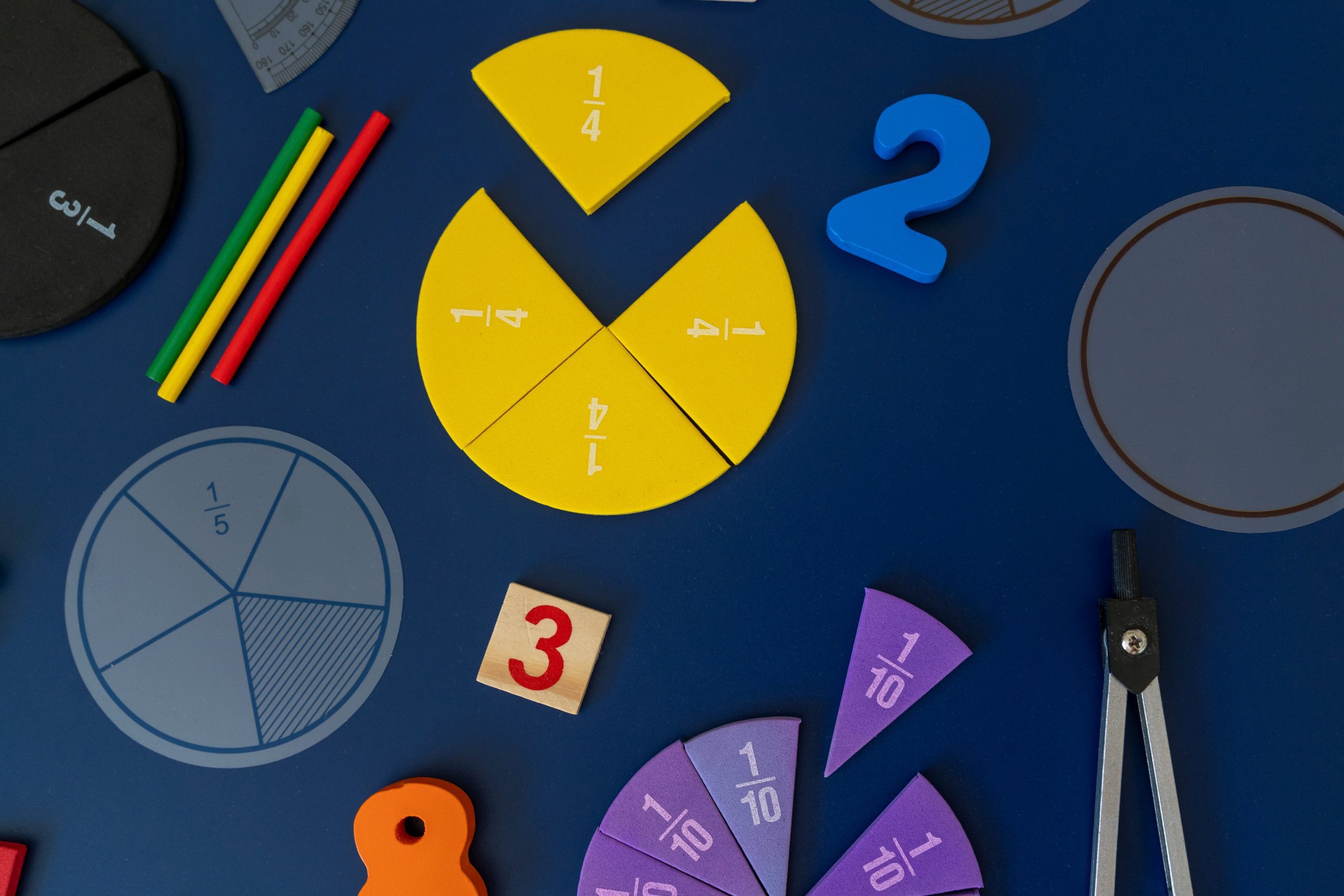
- Use concrete examples to illustrate ideas. Building a tower of bricks helps with counting. Cutting a cake or pizza into portions helps with fractions.
- Help raise awareness of direction, for example, working from right to left for addition.
- Try reading tables from both top to bottom and left to right.
- Talk about numbers – TV Channels, dates, birthdays, house numbers, page numbers, phone numbers.
- Count when skipping, scoring goals, climbing stairs (then try doing this two at a time).
- Use children’s games to work on numbers. For example Connect 4, dominoes, board games such as Snakes and Ladders (great for counting forwards from different numbers, and not just from 1).
- Use terminology that is used in maths – ask your school for this if needed.
- Make games such as ‘pairs’ with cards to help match symbols.
- Time – discuss the concepts of time in different ways, for example, day, week, month, year, early and late.
- Encourage them to help with things like weighing and measuring when cooking.
Difficulties in secondary school:
- vocabulary will become more demanding
- sequencing might be more of a problem: -1.5, -0.5, 0.5, 1.5
- greater difficulty with ‘wordy’ problems, for example extracting the numerical
- information and knowing where to start with the calculation
- knowing where to start in a calculation or remembering the correct order of steps
- difficulty showing how an answer was worked out, even if it’s correct
- graphs and three-dimensional work might be difficult
algebra might be confusing.
How to help in secondary school
- For best support, parents and teachers must share information. Memory difficulties may affect maths scores despite good understanding. Dyslexic learners may create their own methods to deal with forgotten times table facts, however, the more steps they take, the more scope for errors.
- Help with use of a calculator. This support is allowed in exams but must first be used in the classroom. Some learners are resistant if it causes embarrassment. The teacher must see the difference to marks or speed to continue. In-class tests must use the same support. Teachers can then apply to Qualifications Scotland (formerly SQA) for Numerical Support for National 5 upwards.
- In an exam, marks will be given for correct working so learners must write down all the steps taken using a calculator.
- Help with learning and understanding vocabulary. Read through questions together. Help extract the numerical information and work out the steps needed, perhaps by drawing simple pictures.
- Find concrete examples where possible to illustrate a topic – for example, encourage them to help with something practical like a car journey by working out the mileage and time it will take to make a journey.