 My Account
 Cart
Cart

 Helpline:
  Recite
A growing community of practice
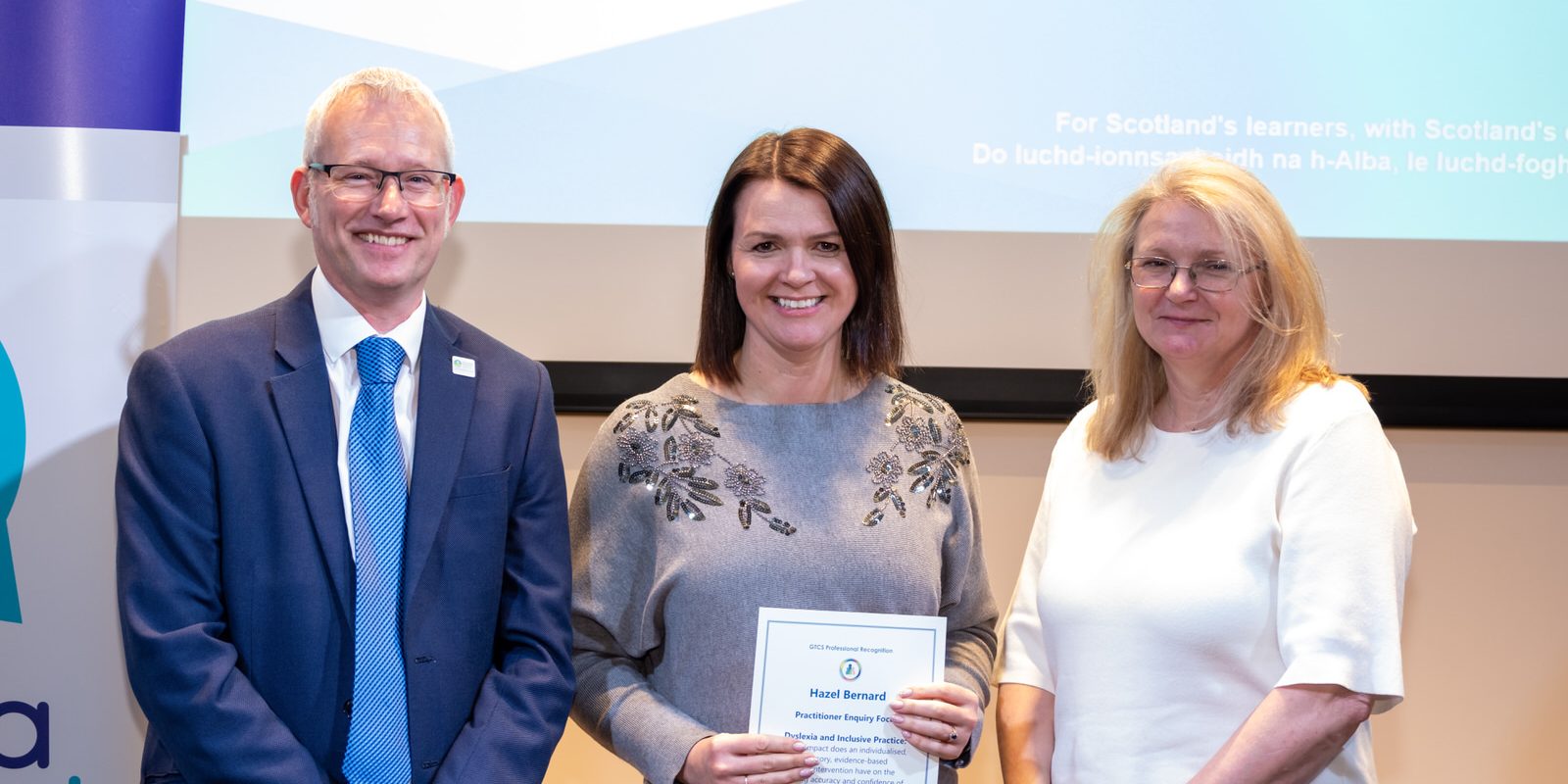
In December, 35 practitioners received their awards for GTCS Professional Recognition in Dyslexia at a special ceremony in the Barracks conference centre in Stirling
Since the programme’s inception, 218 educators have taken part and 133 have gained their certification – far exceeding the initial expectations of the course’s potential.
The practitioners who have completed the course and the 47 in the current cohort are adding to an ever-growing community of professionals equipped to identify and support learners with dyslexia in schools and colleges, and cascade knowledge throughout their learning communities.
Prior to receiving their certificates, guests heard from esteemed speakers from across the field of education in Scotland.
Cathy Magee OBE, Chief Executive of Dyslexia Scotland, welcomed the audience and congratulated the group on their successful learning journeys.
Fran Foreman, Senior Education Officer at Education Scotland, gave an overview of the programme.
David Burgess, Head of Professional Learning at Education Scotland, gave insights into the national picture, warmly congratulating the group and praising them for their vital input to Scotland’s evolving curriculum model. David urged the educators to remain true to the original purpose of education, stressing that as a sector, we must ask ourselves, “Are we teaching our children and young people to be taught, or are we teaching them to learn?”
Jacqueline Morley, GTCS Teaching Standards Education Officer: Professional Recognition, sent a recorded message reminding the group of the importance of staying solution-focused in challenging times, sharing a mantra, “Start where you are, do what you can, use what you have.”
Course alumnus and panel member Victoria Armet gave a perspective from her practice following her own Professional Recognition, sharing experiences of the programme and beyond.
Finally, Beth Davidson, a dyslexic young person, talked about experiences at school, moving to college and how assistive technology has helped her. Her advice to the educators in supporting learners with dyslexia was, “Have a conversation. And repeat the conversation later on. It’s great asking me at the start of the year, but ask me again half way through about what I need then. I might not be confident to come and speak to you, but if you start the conversation, I’ll be able to talk about what I need now.”
Following the speakers, the programme participants were presented their certificates, followed by a buffet lunch.
The GTCS Dyslexia and Inclusive Practice programme is a critical initiative in the strategy for a dyslexia-friendly Scotland. Details of the next intake are expected to be announced in April 2026.