 My Account
 Cart
Cart

 Helpline:
  Recite
Disclosure and dyslexia
by Ross Duncan, a Member of Dyslexia Scotland
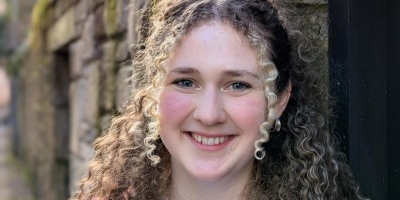
An opportunty to share her story gave Abbie from Aberdeenshire the courage to disclose her dyslexia
When Abbie Freeman decided to share her story through the BBC Disclosure: What If I Can’t Read? documentary series, she didn’t expect the opportunity to come her way so suddenly.
“The offer came out of nowhere,” she recalls, “and after watching another episode about a girl with ADHD, I realised how powerful it could be to tell my dyslexia story.”
Abbie’s documentary explored her experience of growing up with dyslexia, which she wasn’t identified with until she was 13. “There’s still so much stigma around dyslexia,” she says. “It wasn’t something I talked about openly. My close friends knew, but I kept it private.”
Watching the finished documentary for the first time was deeply emotional for Abbie. “I cried at the end. I was proud of myself but nervous too, wondering how people would react. But once it came out, I felt even prouder.”
Opening up
Opening up about something so personal wasn’t easy. “It was difficult,” Abbie admits, “but it’s been life-changing and healing. No one should ever feel embarrassed about dyslexia. I’d come full circle. I was graduating from university just as the documentary was released, ten years after my identification. It felt like closing a chapter in my educational journey.”
To her relief, people’s reactions were overwhelmingly positive. “I’d worried that people would see me differently, but nothing changed. My high-school friends are still my friends, and some even appeared in the documentary.”
Abbie emphasises the importance of empathy and awareness. “It’s not about blame,” she explains. “Everyone’s circumstances are different. I want people to see the strengths of people with dyslexia. Parents often worry that their children’s lives will be harder, but being neurodivergent can bring real advantages.”
She recalls speaking at a primary school after the film aired: “Some parents said it helped them feel hopeful. I remember thinking how much it would’ve helped me as a kid to see someone older who’d come out the other side.”
A pivotal figure in Abbie’s education was her English teacher, Miss Murray. “She was the first to really see me. I was in additional support classes, and she was so patient. I’ll never forget when she gave everyone in the class a little gift – mine was a pencil case – and it made me feel seen for my effort, not my mistakes. That encouragement meant a lot.”
Abbie strongly believes in the importance of Additional Suport for Learning teachers. “Even in the six years since I left school, funding has changed. Those teachers are vital, not just in school but at university too. Being the first in my family to go to university I needed that help to understand expectations and build confidence.”
Being identified with dyslexia helped Abbie. “It explained everything. Before, I just thought I was slow. Finding out gave me a way forward, and community. I wasn’t alone anymore.”
Her degree in Film, Media, and Journalism suited her strengths in storytelling. “I wasn’t a big reader, but documentaries were accessible to me. I could watch, listen, and absorb everything. That’s what drew me to TV and video – it’s visual, creative, and fast-paced.”
Now working as a casting researcher at STV on Antiques Riviera for Channel 4, Abbie feels she’s found her niche. “I love meeting people, hearing their stories and editing their interviews. It plays to my strengths: storytelling through visuals rather than text.”
What’s next for Abbie?
As for the future, Abbie keeps an open mind. “TV is unpredictable: short contracts, fast turnarounds. But I’d love to move into producing or current-affairs work. Having been in front of the camera, I understand how vulnerable people can feel. That perspective matters.”
Reflecting on her journey, she adds, “If my story helps even one young person with dyslexia feel less alone, then it’s worth everything.”